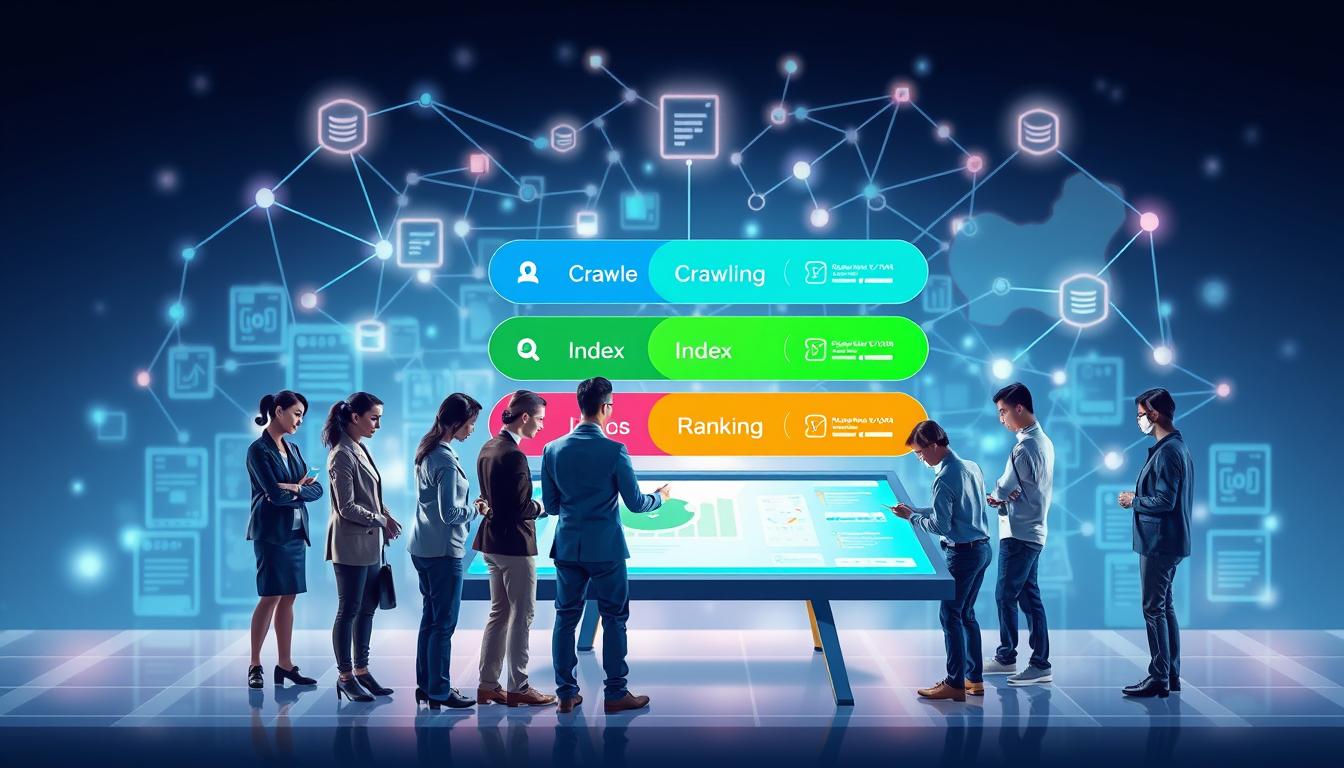
Modern internet users rely on powerful tools to find information online. These systems serve as the primary gateway to the vast digital world. They connect people with the content they need instantly.
Google and other platforms use sophisticated automated technology to explore the web. This complex operation happens behind the scenes every time someone looks for answers. The system involves multiple stages that determine what content appears in results.
Understanding this mechanism is essential for website owners and content creators. Visibility in organic results directly impacts traffic and business success. Aligning your online presence with how these systems function creates better opportunities for discovery.
This guide breaks down the technical process into clear, understandable stages. You’ll learn about crawling, indexing, and ranking—the three core functions that power modern search. The information comes from official documentation and industry expertise.
Key Takeaways
- Search engines operate as automated answer machines that process billions of queries daily
- The system works through three primary stages: crawling, indexing, and ranking
- Google uses web crawlers to regularly explore and discover new content
- Not every webpage successfully completes all stages of the process
- Search platforms don’t accept payment to crawl sites more frequently or improve rankings
- Understanding search mechanics helps optimize websites for better visibility
- The process continuously organizes web content to deliver relevant results
Introduction to Search Engines
Online discovery tools serve as the primary interface between people and the vast digital universe of content. These systems organize billions of web pages into accessible formats.
Defining Search Engines and Their Role
A search engine functions as an information retrieval system that processes user queries. It scans its massive database to deliver organized results.
Google dominates this space with 5.8 billion unique visitors in July 2025. Traditional platforms differ from newer AI-powered alternatives like Perplexity.
Importance of Search Engines in Digital Marketing
These platforms represent essential channels for attracting qualified traffic. People actively searching for specific information provide valuable opportunities.
Visibility in organic results directly impacts business growth. The traffic generated tends to be highly targeted and conversion-ready.
| Feature | Traditional Search | AI-Powered Search |
|---|---|---|
| Result Format | Ranked list of websites | Direct conversational answers |
| Market Share | Over 90% dominance | Emerging presence |
| User Experience | Multiple options to explore | Single comprehensive response |
Understanding these tools helps content creators align their strategies effectively. Proper optimization ensures better discovery by the right audience.
Exploring How Search Engines Work
Behind every instant query response lies a sophisticated three-stage system that operates continuously. This automated process organizes the entire web into a searchable database before users even enter their questions.
Overview of Crawling, Indexing, and Ranking
The mechanism involves three distinct phases that function automatically. First, crawling discovers new and updated web pages through automated bots. These bots systematically explore the internet by following links.
Next comes the indexing phase. Here, the system analyzes discovered content to understand each page’s purpose. This information gets stored in a massive organizational database.
Finally, ranking determines which pages appear in search results. When someone enters a query, the engine scans its index rather than the live web. Complex algorithms then display the most relevant content.
| Stage | Primary Purpose | Key Characteristics |
|---|---|---|
| Crawling | Discover web content | Automated bots, link following, 24/7 operation |
| Indexing | Organize and store content | Content analysis, database storage, understanding context |
| Ranking | Deliver relevant results | Query matching, algorithm processing, relevance scoring |
What This Guide Will Cover
This comprehensive exploration details each operational stage. You’ll learn about technical crawling mechanisms and indexing decisions. The guide also explains numerous ranking signals that determine positioning.
Understanding this three-phase process reveals potential optimization opportunities. Different approaches address crawlability, indexing, and ranking challenges separately. Each requires specific strategies for maximum visibility.
The Crawling Process
Website visibility depends on successful navigation by specialized crawling programs. These automated systems form the foundation of content discovery across the internet.
Understanding Web Crawlers and Googlebot
Googlebot serves as Google’s primary web crawler, systematically exploring websites. This automated robot follows links from known pages to discover new content.
The crawling process uses algorithmic decisions to determine frequency and depth. Crawlers avoid overloading servers by adjusting their pace based on site capacity.
Utilizing Robots.txt and Crawl Directives
Robots.txt files provide essential instructions for crawlers visiting your site. Located in the root directory, these files suggest which sections should be accessed.
Proper crawl directives help manage your crawl budget effectively. This ensures important pages receive priority attention from search engine robots.
Strategic implementation prevents wasted resources on duplicate or administrative content. Well-structured internal linking guides crawlers to your most valuable pages.
Demystifying the Indexing Process
Indexing serves as the organizational backbone that makes billions of web pages instantly searchable. This phase transforms raw crawled content into structured information within a massive database. The system analyzes each page to understand its purpose and relevance.
How Content is Analyzed and Organized
During indexing, automated systems examine multiple elements on each page. They process visible text, HTML tags, and image attributes. This comprehensive analysis helps determine the page’s primary topic and intent.
The collected data gets stored in an organized index database. This repository contains information about billions of web pages. It enables quick retrieval when users submit queries.
| Indexing Component | Primary Function | Key Elements Analyzed |
|---|---|---|
| Text Analysis | Understand page topic | Headings, paragraphs, metadata |
| Media Processing | Contextual understanding | Image alt text, video content |
| Structural Review | Content organization | HTML tags, schema markup |
Managing Duplicate Content and Canonical URLs
Search platforms identify similar pages through clustering technology. They group related content together. The system then selects one representative version as canonical.
Proper canonical tags guide this selection process. They help prevent indexing confusion between duplicate pages. Clear signals ensure the most appropriate version appears in results.
Not every crawled page enters the index. Low-quality content or technical barriers may block inclusion. Effective content strategy improves indexing success rates.
Ranking Algorithms and Their Impact on SEO
Ranking represents the decisive phase where algorithms evaluate indexed content against user queries. This complex system determines which pages appear in search results and in what order. The process involves hundreds of signals working simultaneously.
Quality Content and User Relevance
Modern algorithms prioritize content that genuinely helps users. They assess whether pages answer queries effectively. Quality evaluation considers expertise, accuracy, and usefulness.
User relevance extends beyond keywords. Systems analyze intent behind each query. They consider location, device type, and search history for personalized results.
Key Ranking Factors and Signals
Several critical elements influence ranking decisions. Backlinks serve as votes of confidence from other sites. Technical factors like loading speed impact user experience.
Content freshness matters for time-sensitive topics. Mobile compatibility is essential since most searches happen on phones. According to Google’s documentation, algorithms continuously evolve through daily updates.
| Ranking Category | Primary Factors | Impact Level |
|---|---|---|
| Content Quality | Originality, depth, expertise | High |
| Technical Performance | Loading speed, mobile-friendliness | Medium-High |
| Authority Signals | Backlinks, social shares | High |
Understanding these factors helps create effective optimization strategies. Focus on genuine improvements that benefit both algorithms and users.
Technical SEO and Website Optimization
Technical optimization forms the structural foundation that supports all digital visibility efforts. These backend improvements ensure automated systems can effectively process your content.
Proper technical setup allows search platforms to discover, understand, and rank your pages efficiently. Without this foundation, even the best content may remain hidden from potential visitors.
Improving Crawl Budget and Site Accessibility
Crawl budget optimization becomes essential for large websites with thousands of pages. This approach ensures automated systems focus on your most valuable content.
Effective site accessibility involves removing barriers that prevent content discovery. Fix broken links and eliminate redirect chains to improve crawling efficiency.
Proper robots.txt files and meta tags give you control over which pages receive attention. Clear navigation hierarchies help automated systems understand your website’s organization.
Enhancing Mobile-Friendliness and Page Speed
Mobile compatibility has become essential since most queries happen on phones. Responsive design adapts seamlessly to different screen sizes and touch interfaces.
Page loading time directly impacts both user experience and ranking positions. Faster pages receive preference because they reduce bounce rates and improve satisfaction.
Technical issues like server errors and slow response times can prevent content access. Regular technical audits help maintain consistent visibility across all platforms.
| Technical Factor | Primary Impact | Optimization Priority |
|---|---|---|
| Crawl Efficiency | Content Discovery | High for Large Sites |
| Mobile Compatibility | User Experience | Essential |
| Page Loading Time | Bounce Rate Reduction | High |
| Site Architecture | Navigation Clarity | Medium-High |
Content Strategies for SEO Success
Content quality directly influences search performance, with superior information consistently earning better positions in results pages. Strategic content planning bridges user needs with platform requirements for optimal visibility.
Creating Quality Content That Ranks
Exceptional content serves user intent while satisfying algorithmic criteria. Understanding what people seek behind each query shapes effective content creation.
Unique perspectives and comprehensive coverage distinguish valuable pages from competitors. Fresh, authoritative information receives preference in search results.
Effective Keyword and On-Page Optimization
Strategic keyword integration helps platforms understand page relevance. Natural placement in titles and headings improves content discoverability.
On-page elements like meta descriptions and header tags provide structural clarity. These technical components work alongside quality content for maximum impact.
Balancing user experience with optimization creates pages that perform well across metrics. This approach delivers sustainable SEO success through genuine value creation.
Leveraging Analytics and SEO Tools
Effective SEO management requires precise tools to measure performance and guide strategy. These platforms turn abstract concepts into measurable data that shows real progress.
Using Google Search Console for Monitoring
Google Search Console serves as your direct communication channel with the platform. This free tool provides essential data about how crawlers interact with your site.
The Index Coverage report reveals exactly which pages Google has added to its index. It shows crawled but unindexed content and URLs encountering errors. This gives actionable insights for improving visibility.
Monitoring crawl statistics helps understand efficiency. You can identify server issues or redirect problems quickly. The cached version in search results shows the last successful crawl time.
Integrating Advanced SEO Platforms like Semrush
Advanced platforms like Semrush provide comprehensive toolsets for deeper analysis. They consolidate keyword research, competitor analysis, and rank tracking into one interface.
Semrush’s Keyword Magic Tool generates thousands of keyword ideas specific to your business. This helps target queries with genuine demand. The platform receives millions of unpaid visits monthly, proving SEO value.
Regular monitoring through these tools enables quick issue detection. You can address ranking drops or indexing problems before they impact traffic. Combining multiple data sources provides a complete performance picture.
Common SEO Challenges and How to Overcome Them
Even the most meticulously planned websites encounter technical obstacles that can hinder their visibility. These issues can block crawlers, confuse the index, and prevent pages from appearing in search results. Proactive management is key to maintaining a healthy site.

Handling Crawl Errors and Redirect Chains
Crawl errors signal problems that stop robots from accessing your content. 4xx errors mean a page is missing. 5xx errors indicate server failure.
Create a custom 404 error page. It should guide visitors back to important pages with helpful links.
When moving a page, use a 301 redirect. This tells crawlers the move is permanent. It passes authority to the new version.
Avoid long redirect chains. They waste resources. Redirect directly to the final destination URL.
Addressing Indexing and Technical Roadblocks
Indexing problems often come from conflicting instructions. A page blocked by robots.txt cannot be read by crawlers. Important tags like canonicals are ignored.
Multiple URLs for the same content create duplicate pages. Use canonical tags to specify the preferred version.
Navigation mistakes can isolate valuable content. Common issues include:
- JavaScript menus that crawlers cannot process
- Different navigation on mobile and desktop sites
- Missing internal links to key pages
Regular audits help find and fix these technical roadblocks before they hurt your rankings.
Conclusion
Mastering search visibility begins with understanding the fundamental mechanics that power modern information retrieval. The journey from a web page to a search results listing involves a sophisticated, multi-stage process.
Successful optimization aligns your website with this system. It focuses on creating high-quality content that serves both crawlers and human users. Technical excellence ensures smooth indexing and strong internal links.
Ultimately, a search engine aims to connect people with valuable answers. Its complex algorithms reward websites that provide genuine usefulness. By building a site that excels in both technical performance and content value, you create sustainable visibility that stands the test of time.