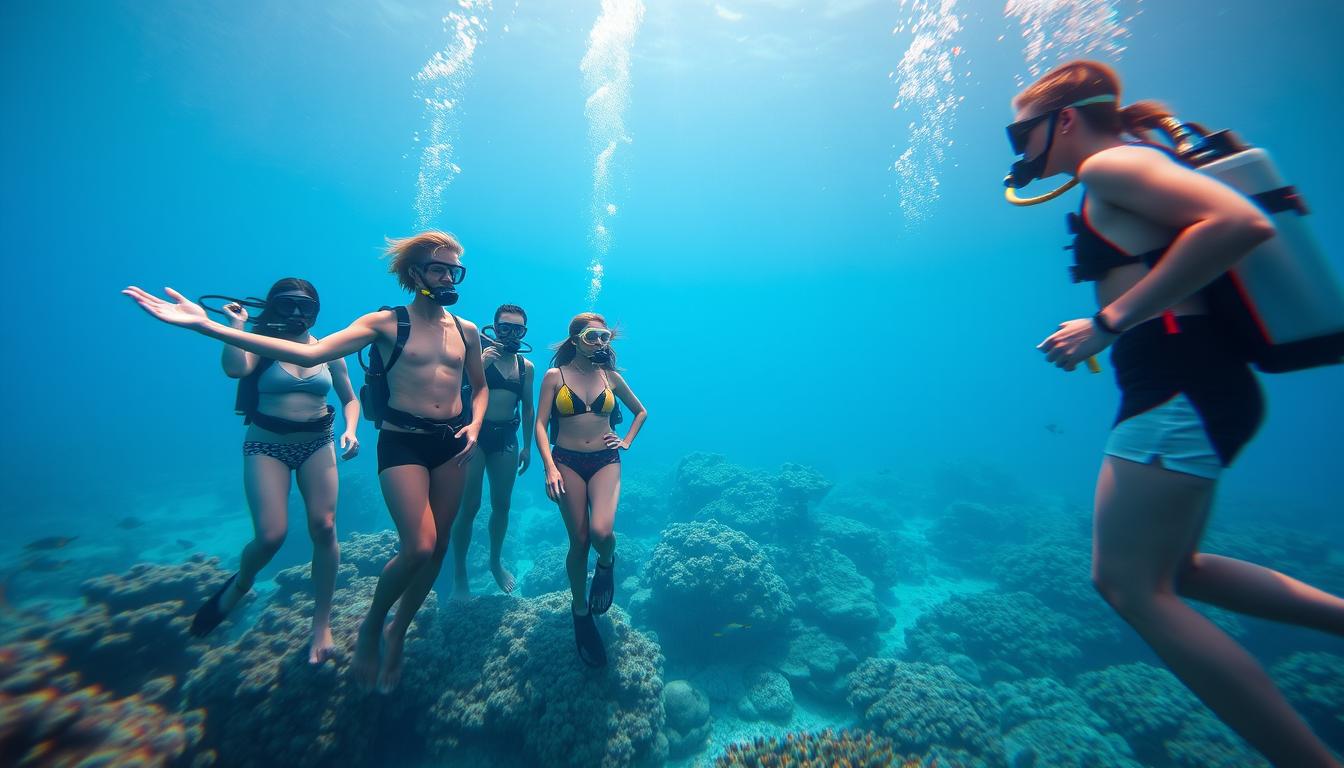
Exploring the underwater world is an incredible experience. It opens up a new realm of adventure. Whether you are interested in pool activities or open water scuba adventures, a solid foundation is essential.
This guide covers everything from competitive swim starts to deep sea exploration. Each type of diving requires specific protocols and a dedicated training approach. Mastering these skills builds the confidence needed for success.
Safety is the most important principle. With proper instruction and the right equipment, this activity becomes very secure and enjoyable. We will outline preparation steps and fundamental safety principles.
Our comprehensive guide provides actionable tips from established organizations. You will learn about technique progressions and equipment maintenance. Developing your abilities is a journey that requires patience and respect for the water.
Key Takeaways
- A strong foundation is critical for all types of underwater exploration.
- Different diving environments require specific safety protocols.
- Proper training builds essential confidence and skill.
- Adherence to established guidelines ensures a secure experience.
- This guide covers preparation, technique, and equipment essentials.
- Patience and practice are key to mastering this valuable skill.
Getting Ready for Your Dive Adventure
Before entering the water, careful planning ensures both enjoyment and security. Proper setup prevents accidents and builds confidence. This preparation phase covers two critical areas.
Understanding Pool Conditions and Environment
Selecting the right pool environment is essential for safety. Modern competition pools offer ideal conditions for training. They provide adequate depth and clear visibility.
Water depth requirements vary by activity. Basic training needs at least four feet of water. Standing dive starts require six feet or more.
| Activity Type | Minimum Depth | Recommended Depth | Safety Purpose |
|---|---|---|---|
| Basic Training | 4 feet | 5-6 feet | Prevent bottom contact |
| Standing Dive Starts | 6 feet | 7-8 feet | Avoid head injuries |
| Competition Diving | 4 feet | Diving well preferred | Spinal protection |
Water clarity and temperature affect comfort and performance. Proper safety equipment must be visible and accessible. These factors create a secure learning space.
Medical Precautions and Fitness Considerations
All prospective divers complete a mandatory medical questionnaire. This disclosure forms the foundation of scuba safety. Honesty about health history is non-negotiable.
Cardiovascular conditions like hypertension require special attention. They represent the leading cause of fatalities underwater. A qualified physician should provide clearance.
“Medical honesty isn’t just paperwork—it’s the difference between a routine dive and an emergency situation.”
Divers need basic fitness awareness, not Olympic athleticism. Understanding physical limitations ensures productive training time. This preparation sets the stage for positive experiences.
Step-by-Step Techniques for a Safe Dive
Developing controlled entry skills through gradual steps ensures comfort and safety in the pool environment. This systematic approach allows participants to build confidence while minimizing risk.
The Seated and Kneeling Approaches
Beginners start with seated positions on the pool deck. Legs dangle in the water while arms extend overhead in a streamlined position.
Students roll forward, leading with their arms while keeping the head tucked. This prevents belly flops and establishes proper entry form.
The kneeling approach uses a kickboard for knee protection. One knee stays close to the pool edge while maintaining the streamlined arm position.
The body naturally overbalances into the water, creating a smooth glide under the surface. This builds essential water awareness.
Transitioning to One Knee and Standing Dives
Advanced positions introduce more complex movements. The one-knee stance involves planting the front foot firmly with toes gripping the edge.
Students learn to push the chin forward after water entry. This prevents unwanted flipping and maintains control.
Standing dives require proper foot placement and body alignment. One foot stays back while the other positions forward with toes wrapped around the pool edge.
The chin tucks to the chest during the rolling motion. This technique ensures fingers break the water surface first.
| Progression Stage | Body Position | Key Safety Focus | Skill Mastery Indicator |
|---|---|---|---|
| Seated Entry | Sitting on deck | Head tuck position | Consistent streamlined entry |
| Kneeling Dive | One knee down | Natural overbalance | Smooth underwater glide |
| One-Knee Stance | Knee and foot planted | Chin thrust control | No flipping motion |
| Standing Dive | Full standing position | Surface entry angle | Clean water penetration |
Fundamental Principles of Learning to Dive Safely
Proper technique foundation serves as the cornerstone for all successful underwater exploration. These core principles ensure every entry into the water maintains maximum control and security.
Streamlining Your Body for a Smooth Entrance
Creating a hydrodynamic shape begins with arms extended overhead. Hands stack perfectly with upper arms squeezing the ears. This positioning minimizes water resistance dramatically.
Fingers point toward the water surface while the chin tucks to the chest. The body elongates completely for optimal entry angle. This technique reduces splash and prevents uncomfortable belly flops.
Early mastery of streamlining establishes excellent habits. These skills carry forward into advanced diving scenarios. Proper form builds essential water confidence throughout your training journey.
Practicing with a Certified Instructor and Buddy System
Professional guidance from certified instructors ensures correct technique execution. Diving should never be attempted without qualified supervision. These experts maintain safety protocols throughout your learning process.
The buddy system pairs divers for mutual equipment checks and underwater monitoring. Partners provide immediate assistance if problems arise. This protocol adds crucial safety layers to every scuba adventure.
Interestingly, unfamiliar buddies often demonstrate heightened awareness. They tend to be more diligent than familiar friends. The group dynamic creates supportive environments for sharing concerns.
Modern training standards reflect fifty years of refinement. They combine scientific research with millions of divers‘ collective experience. This evolution makes current methods exceptionally effective.
Maintaining Dive Equipment and Embracing Training Protocols
Modern scuba equipment is engineered for reliability, but its safety depends entirely on consistent maintenance and pre-dive routines. A well-maintained gear set, used by trained individuals, poses minimal risk.
Thorough checks before entering the water are non-negotiable. This routine verifies three critical systems every time.
Essential Equipment Checks and Pre-Dive Routines
The pre-dive check is a simple yet vital ritual. It ensures the air supply is sufficient for the planned excursion.
You must confirm the regulator delivers air smoothly. Testing the buoyancy control device is equally important for managing your position underwater.
Neglecting these steps is a leading cause of preventable incidents. This makes the routine critical for all experience levels.
| Checkpoint | Component | Action | Purpose |
|---|---|---|---|
| Air Supply | Tank & Gauge | Verify pressure | Ensure adequate breathing gas |
| Breathing System | Regulator | Take two breaths | Confirm air delivery |
| Buoyancy | BCD Jacket | Inflate/deflate orally | Test surface flotation & control |
During a certification course, this process involves three people. The student, their buddy, and the instructor all inspect the gear. This creates multiple safety layers before each entry.
Equipment failure is rare with proper care. Training teaches how to manage problems, like using a buddy’s alternate air source. These protocols have been refined over many years.
Statistics show this approach works. Diving has a safety record comparable to everyday activities like driving. This makes the sport accessible for people who complete proper training.
Conclusion
Every journey into the aquatic world begins with a solid foundation. This guide has outlined the essential steps for building confidence and competence.
Whether your goal is competitive pool performance or exploring open water, the principles remain the same. Proper preparation, progressive skill development, and strict safety protocols are non-negotiable.
Respecting your training limits is crucial for a secure experience. An entry-level certification course is a starting point, not a final destination. It equips you for basic adventures while highlighting paths for future growth.
Diving offers incredible rewards when approached with patience and respect. Connect with certified instructors and begin your adventure. The underwater world awaits your discovery.