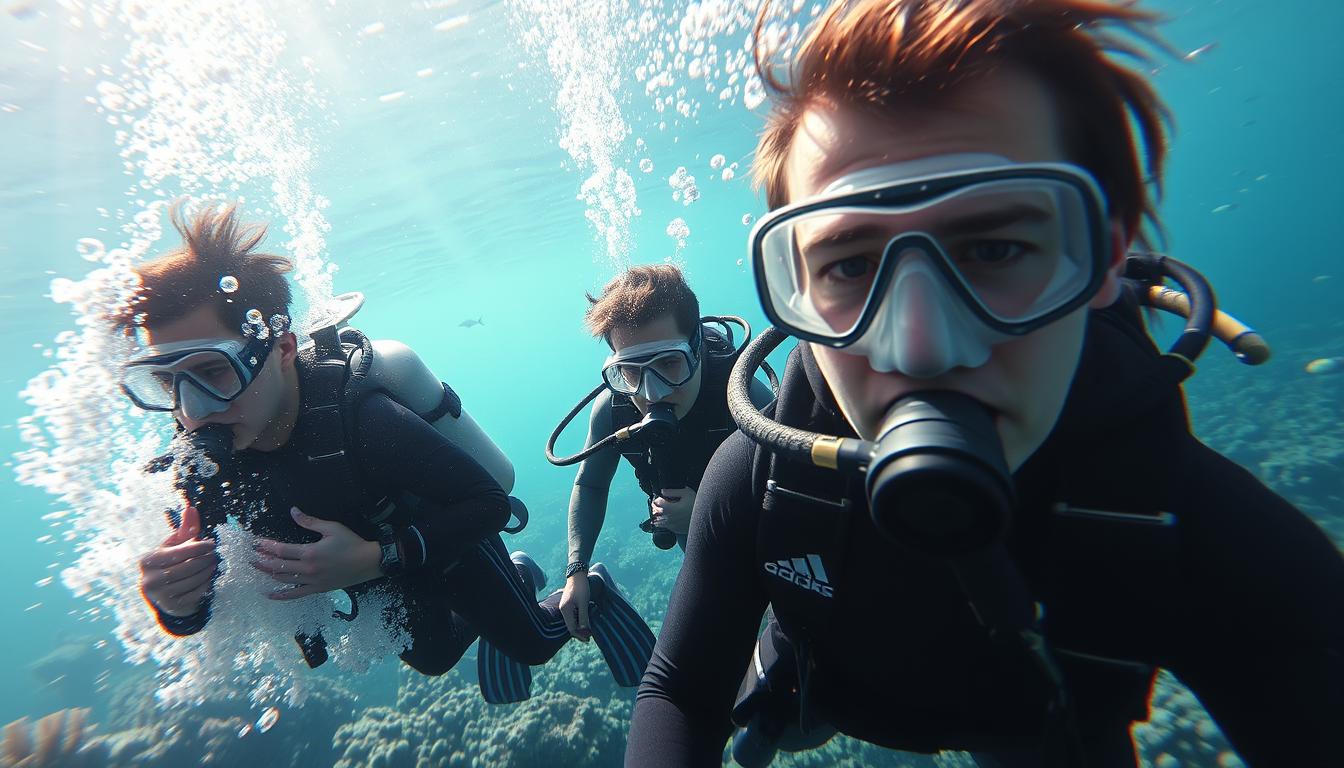
Exploring the underwater realm offers incredible adventures, but safety should always come first. Even experienced enthusiasts can sometimes overlook basic protocols that protect everyone involved.
This guide focuses on recognizing patterns that can lead to unsafe situations beneath the waves. Understanding these potential errors helps build confidence and ensures every underwater journey remains enjoyable.
Whether you’re new to this activity or have extensive experience, maintaining proper habits is essential. Safety isn’t about rigid rules—it’s about developing awareness that enhances your entire experience.
We’ll examine several areas where attention matters most. From equipment preparation to buoyancy management and communication with your partner, each aspect contributes to a successful outing.
Remember that identifying these areas for improvement represents growth opportunities. The goal is maximizing your enjoyment while minimizing risks during each aquatic exploration.
Key Takeaways
- Recognizing potential errors enhances safety for all participants
- Both beginners and veterans can benefit from reviewing fundamental practices
- Proper equipment checks form the foundation of secure underwater activities
- Buoyancy control and communication skills prevent most issues
- Continuous learning transforms safety from obligation to second nature
- Awareness of these areas improves confidence and enjoyment
- Each outing presents opportunities to refine your techniques
Introduction to Diving Safety and Skill Building
Skill development forms the bedrock of secure and enjoyable underwater experiences for all participants. Whether you’re beginning your journey or have years of experience, fundamental techniques remain crucial for safe exploration.
Setting the Stage for a Confident Dive
Confidence underwater stems directly from competence. The Divers Alert Network (DAN) consistently reports that human error causes most incidents, not equipment failure.
This highlights why proper education matters. A structured scuba course provides essential knowledge and muscle memory needed for safe water activities.
The Importance of Fundamental Skills
Basic protocols like buoyancy control and breathing techniques require regular practice. These skills should never be taken for granted, regardless of experience level.
Even veteran enthusiasts benefit from returning to fundamentals periodically. Continuous refinement ensures techniques remain sharp over time.
Building competence through dedicated training transforms safety from obligation to second nature. This commitment to ongoing development helps prevent potential issues before they arise.
Recognizing Common Diving Mistakes to Avoid
Experience becomes a double-edged sword when accumulated hours lead to shortcuts that compromise fundamental protocols. The most prevalent errors often stem from behavioral patterns rather than lack of knowledge.
Recognizing these patterns represents the first step toward safer underwater exploration. Both new and veteran enthusiasts benefit from periodic self-assessment.
Overconfidence and Neglecting Safety Protocols
Many incidents occur when participants believe their logged hours exempt them from basic routines. This mindset creates significant liability beneath the surface.
As one instructor observed:
“I’ve seen enthusiasts with thousands of hours skip essential steps because ‘they know what they’re doing.’ This attitude frequently precedes avoidable situations.”
The dangerous assumption that experience replaces protocol can lead to critical oversights. Regular practice of fundamentals remains essential regardless of skill level.
Skipping Pre-Dive Checks and Equipment Maintenance
Equipment-related issues account for 11% of incidents according to Divers Alert Network data. Yet many continue using gear with obvious problems.
Rationalizations like “this regulator always leaks a little” normalize potential hazards. Proper maintenance prevents most equipment failures.
| Dangerous Rationalization | Reality Check | Recommended Action |
|---|---|---|
| “I don’t need buddy checks anymore” | Two sets of eyes catch oversights | Always complete pre-dive verification |
| “My gear always works fine” | Equipment degrades over time | Schedule regular professional servicing |
| “This is how much weight I always use” | Conditions change each outing | Conduct buoyancy check every time |
Consistent protocols transform safety from obligation to instinct. Addressing these behavioral patterns significantly reduces risk factors.
Essential Pre-Dive Preparation and Equipment Checks
Proper gear inspection represents the critical bridge between land-based preparation and underwater execution. This systematic approach ensures every piece of equipment functions reliably when you need it most.
Conducting Thorough Pre-Dive Safety Rituals
Establishing consistent rituals before each immersion prevents oversight. Many enthusiasts rush through these essential steps due to excitement or time pressure.
A comprehensive check should include verifying tank pressure and testing your breathing regulator. Confirm that your BCD inflation system operates correctly before entering the water.
Ensuring Proper Gear Service and Functionality
Regular maintenance schedules protect against equipment failure during critical moments. Professional servicing catches issues that casual inspection might miss.
Look for specific things like O-ring condition and hose integrity during your personal assessment. Gauge accuracy matters for monitoring air supply throughout your dive.
| Equipment Component | Pre-Dive Inspection Focus | Service Interval |
|---|---|---|
| Regulator System | Breathing resistance, leak checks | Annual professional service |
| BCD Inflation | Air retention, button response | Bi-annual inspection |
| Tank Valve | Pressure reading, O-ring seal | Visual check every dive |
This disciplined approach benefits both you and your buddy. It creates a safety culture that protects everyone during underwater activities.
Mastering Buoyancy, Weight, and Air Control
The art of buoyancy control separates recreational enthusiasts from truly skilled underwater explorers. This fundamental skill affects everything from air consumption to overall comfort during your immersion.
Proper Buoyancy Control Techniques
Many people struggle with stability, constantly adjusting their BCD without achieving neutral buoyancy. The solution requires patience and proper technique.
Stop swimming completely and wait 10-20 seconds. Complete a full breathing cycle while observing your movement. Make tiny adjustments using short bursts on your inflation button.
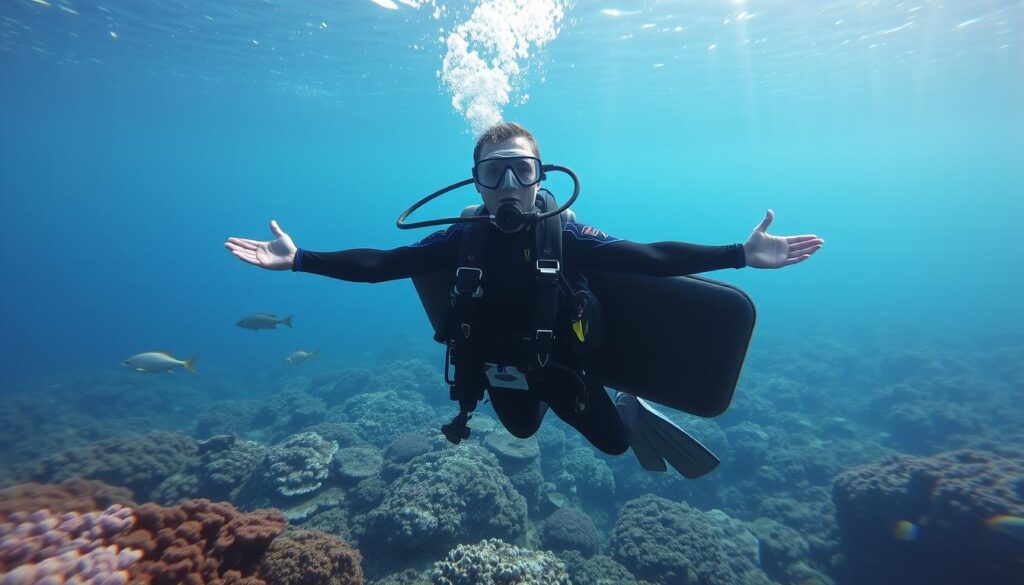
Remember that depth changes everything. As you descend, pressure increases and you become less buoyant. Add small amounts of air to your BCD during descent.
During ascent, you must release air to prevent rapid upward movement. Skilled enthusiasts make frequent, minimal adjustments rather than large corrections.
Avoiding Excess Lead and Mismanaged Weight
Carrying too much weight creates multiple problems. It leads to over-inflated BCDs, excessive air consumption, and unnatural body positioning.
An ideally weighted diver uses an almost empty BCD. Your lungs provide fine-tuning while the BCD offers broader adjustments. This approach conserves energy and air.
Conduct a proper weight check at the surface before each outing. Deflate your BCD completely while holding a normal breath. You should float at eye level in the water.
For more detailed buoyancy control tips, consider professional guidance. Proper technique transforms exhausting struggles into effortless hovering.
Mastering these elements creates safer, more enjoyable underwater experiences while significantly extending your bottom time.
Diving Buddy Dynamics and Effective Communication
The relationship between dive buddies creates a protective system that prevents incidents. Your partner serves as your eyes, backup air source, and emergency responder. This teamwork transforms individual exploration into shared security.
Building Trust with Your Dive Buddy
Peer pressure represents a serious concern in underwater activities. One enthusiast might influence another to exceed their comfort zone. This creates conditions where errors become more likely.
Any participant can cancel any outing at any moment. This decision requires no justification or apology. True professionals respect this judgment rather than viewing it as weakness.
Establish trust through clear pre-immersion discussions. Agree on hand signals, depth limits, and time parameters. Regular check-ins during the activity maintain awareness of each other’s condition.
Stay attentive to your partner’s location throughout the experience. Don’t just focus on the beginning and end. Effective communication creates a safety net that protects both people from equipment issues or individual errors.
Optimizing Dive Performance: Techniques and Practice Tips
Small refinements in technique can dramatically extend your time underwater while reducing effort. Improving your air consumption requires combining multiple small adjustments rather than seeking one magic solution.
Controlled Breathing for Efficient Air Consumption
Your breathing pattern significantly impacts how quickly you use air. Slow, deep breaths conserve more oxygen than rapid, shallow ones. This approach also helps maintain calmness throughout your immersion.
Here’s a smart strategy: position yourself about 5-6 feet shallower than your group. Since pressure increases with depth, staying slightly higher reduces the density of air you consume. This simple adjustment can extend your dive time by approximately 10%.
Maintaining a Streamlined Body Position Underwater
A horizontal body position minimizes drag and effort. Keep your arms close to your sides and legs extended behind you. Your shoulders should sit slightly lower than your hips for optimal hydrodynamics.
Scuba activities burn around 600 calories per hour. Efficient movement reduces this energy expenditure. Proper gear configuration also helps minimize resistance in the water.
Practice one technique at a time during training sessions. Gradually integrate improvements until they become automatic. This systematic approach builds muscle memory for better performance.
Adapting Your Dive Strategy: Refresher Courses and Site Selection
The most experienced enthusiasts know that proper preparation extends beyond equipment to include skill evaluation. Smart planning involves both refreshing abilities and choosing destinations that match your current capabilities.
Knowing When to Take a Scuba Refresher
If you haven’t been in the water for some time, a scuba refresher course provides affordable skill reinforcement. The need depends on your experience level and time away.
Divers with fewer than 10 dives who haven’t explored underwater in a year should definitely take a refresher. Even instructors benefit from structured review after extended breaks.
There’s no shame in acknowledging when skills need refreshing. Your body changes over time, and a brief training session ensures you’re ready for new adventures.
Selecting Dive Destinations That Match Your Skill Level
One fundamental rule guides all underwater exploration: never exceed your training and experience level. Beautiful photos of marine life don’t reveal current strength or depth challenges.
Popular sites in Fiji, Indonesia, and Palau can have strong currents that turn dives into exhausting workouts. Research conditions thoroughly before booking any trip.
Watch videos showing bubble direction to assess current strength. Consult with travel specialists who understand different experience levels. Choose destinations that match your capabilities rather than just appealing scenery.
This approach ensures every underwater journey remains enjoyable and secure for divers of all skill levels.
Conclusion
What separates exceptional enthusiasts from average participants is a mindset of perpetual improvement and respect for fundamentals. True expertise in scuba diving isn’t measured by logged hours but by consistent application of safety protocols and willingness to learn from every experience.
Health factors significantly impact dive safety. According to DAN research, dehydration ranks among top contributors to decompression sickness. Avoid excessive alcohol consumption before dives since it removes fluids from your blood. Remember that two 45-minute dives burn approximately 900 calories, making proper hydration and rest essential.
What defines a skilled diver extends beyond technical ability. It includes listening to dive guides, maintaining gear properly, and respecting all safety stops. Controlled ascents and appropriate surface intervals prevent pressure-related issues.
The best divers embrace continuous learning, making each dive an opportunity to refine skills and discover new aspects of marine life. This commitment ensures every underwater adventure remains safe, enjoyable, and rewarding for enthusiasts at all experience levels.