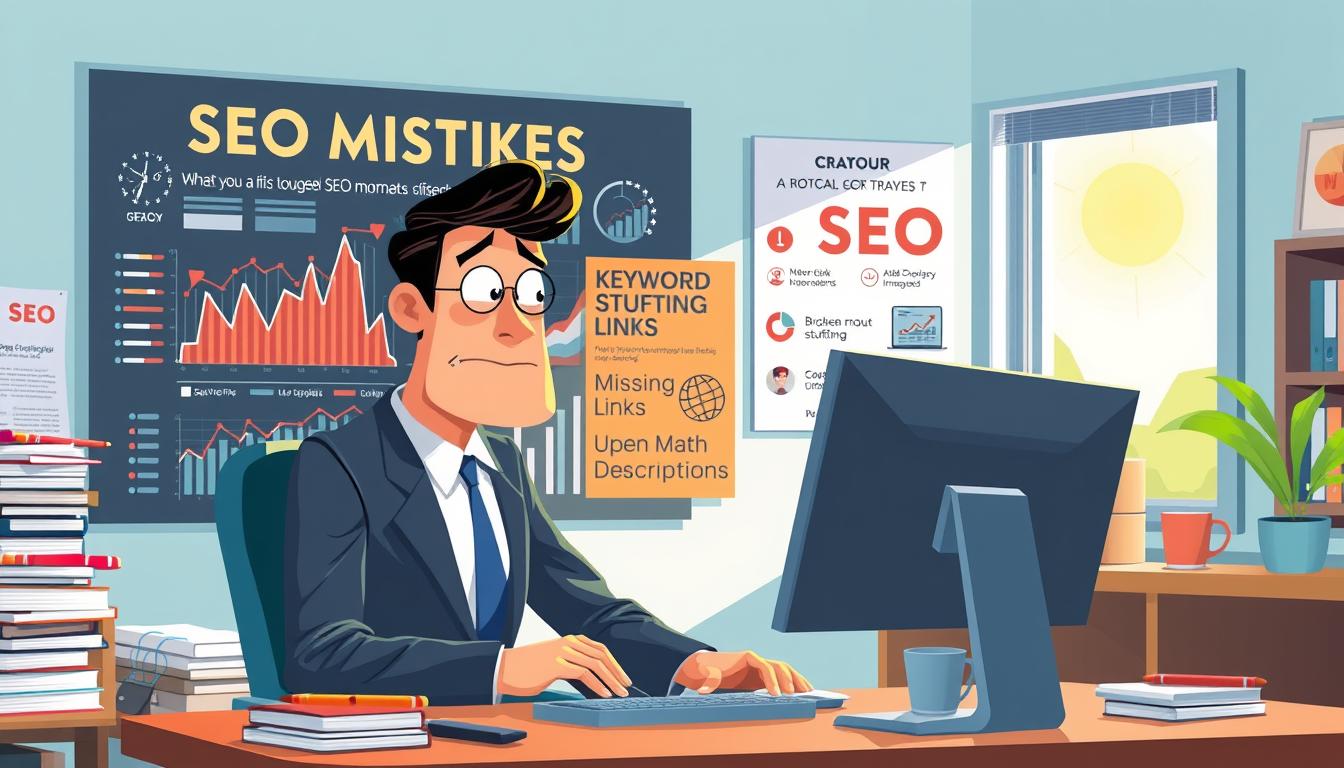
Your website’s position on search engines like Google directly impacts your visibility and success. When you drop from the first page, click-through rates plummet dramatically. Many businesses struggle with optimization issues that hurt their performance without realizing what’s wrong.
These problems affect companies of all sizes, from local shops to large corporations. Site owners often don’t recognize how technical and content issues undermine their search engine performance. The good news is that most optimization errors are completely fixable.
This guide provides practical solutions for both technical and on-page problems. You’ll learn clear steps to recover your search visibility and improve your website’s ranking potential. Our actionable advice helps you identify and correct issues efficiently.
Key Takeaways
- Search engine ranking positions significantly influence website traffic and visibility
- Many businesses unknowingly make optimization errors that hurt performance
- Most search engine optimization problems have straightforward solutions
- Both technical and content-related issues can impact your rankings
- Proactive identification and correction lead to better search results
- Practical guidance helps you implement effective fixes quickly
- Regular monitoring prevents recurring optimization challenges
Introduction to SEO and Its Impact on Search Rankings
Effective search engine optimization transforms how potential customers discover your business online. This strategic approach makes your website more visible when people search for topics related to your offerings.
Understanding SEO Fundamentals
Search engine optimization involves improving your website’s content and structure. The goal is increasing visibility on platforms where people look for information.
Google dominates the search landscape with over 83% market share. Most optimization strategies focus on ranking well on this platform. The same techniques work effectively across other search engines too.
Bing, Yandex, and Firefox all respond to similar optimization principles. A well-optimized site performs better across multiple search platforms simultaneously.
The Role of SEO in Driving Organic Traffic
Organic traffic comes from people finding your site through natural search results. This free traffic brings qualified leads actively seeking solutions.
Consistent visibility in search results builds brand awareness and authority. Searchers develop familiarity and trust when they regularly encounter your brand.
High search rankings help control your brand narrative. You determine what potential customers learn about your business. This strategic positioning directly influences conversion rates by reaching interested visitors.
Overcoming Technical SEO Challenges
Your website’s infrastructure plays a crucial role in determining how search engines interact with and rank your pages. Technical optimization addresses backend elements that visitors don’t see but significantly impact performance.
Improving Site Speed and Mobile Optimization
Page loading times directly affect user experience and search rankings. Slow pages cause visitors to leave quickly, sending negative signals to search engines.
Google’s mobile-first indexing means your mobile version now determines rankings. A responsive design ensures proper display across all devices.
| Technical Issue | Impact | Solution Tool |
|---|---|---|
| Slow page speed | High bounce rates, poor rankings | Google PageSpeed Insights |
| Non-responsive design | Mobile ranking penalties | Mobile-Friendly Test |
| Crawl errors | Pages not indexed | Google Search Console |
Ensuring Proper Crawlability and Indexing
Search engines must access your content before ranking it. Crawlability problems prevent pages from appearing in results.
Issues like blocked pages in robots.txt files or broken links create barriers. Regular audits identify these obstacles.
“Technical optimization forms the foundation upon which all other SEO efforts build. Without proper infrastructure, even the best content struggles to rank.”
Proper site architecture and error-free pages ensure search engines can efficiently crawl and index your content. This foundation supports all other optimization efforts.
Examining On-Page SEO Errors
Elements visitors see on your webpages significantly influence how search engines evaluate your content. On-page optimization focuses on user-facing components like text, images, and internal links.
These visible features work together to create positive signals for ranking algorithms. Proper implementation helps both users and search engines understand your page’s purpose.
Optimizing Meta Descriptions and Title Tags
Your title tags remain critical ranking factors that require careful attention. Include target keywords naturally while keeping titles under 60 characters.
Meta descriptions don’t directly affect rankings but dramatically impact click-through rates. Write compelling summaries that accurately represent your page’s value.
Creating High-Quality, Intent-Aligned Content
Search algorithms prioritize content that matches user search intent. Your material must provide exactly what people seek when they type specific queries.
High-quality content demonstrates accuracy, relevance, and strong E-E-A-T signals. Avoid keyword stuffing, which creates unnatural reading experiences and can trigger penalties.
Instead, distribute keywords naturally throughout titles, opening paragraphs, and body text. This approach satisfies both algorithmic requirements and human readers.
Addressing common seo mistakes
A pattern of recurring issues often undermines even the most well-intentioned optimization efforts. These problems are not limited to a specific niche or company size. They affect local businesses and global enterprises alike.
Many site administrators operate without realizing how certain practices hurt their search performance. This lack of awareness leads to a gradual decline in rankings and visibility.
Correcting these errors is a continuous process, not a single event. Your website evolves, and search engine algorithms frequently update. Staying proactive is essential for maintaining positive results.
The encouraging news is that most of these widespread mistakes are entirely avoidable. With the right knowledge, you can implement systematic fixes. A comprehensive guide on the biggest SEO mistakes offers valuable insights for this process.
True success requires a holistic view. Focusing on just one area of optimization is insufficient. You must pay attention to the interconnected elements that influence your overall website health and search presence.
Enhancing Internal Linking and Tag Optimization
Strategic connections between your webpages create pathways for both visitors and search engines. These internal links serve dual purposes by guiding users to relevant content while distributing ranking authority across your site.
Building a Robust Internal Linking Structure
Internal links encourage visitors to explore additional pages, improving engagement and conversion rates. They also help spread link equity throughout your website.
This ensures all content has better ranking potential. Manual link building can be time-consuming, but tools like AIOSEO’s Link Assistant automate finding linking opportunities between related pages.
Refining URL Structures and Tag Usage
Anchor text—the clickable words in a link—requires careful optimization. Properly optimized anchor text improves both search performance and user experience.
Over-optimization occurs when using exact-match keywords repeatedly. This creates unnatural reading experiences and may trigger algorithmic penalties.
| Anchor Text Approach | User Impact | Search Engine Signal |
|---|---|---|
| Natural & Descriptive | Clear understanding of linked content | Positive relevance indicator |
| Over-Optimized | Confusing, lacks context | Potential manipulation flag |
| Generic (“click here”) | Minimal information value | Weak relevance signal |
Google recommends reading anchor text independently to verify it makes sense. Your links should serve users first while naturally incorporating relevant keywords.
Well-structured URLs and proper tag usage create clear signposts throughout your website. This improves both navigation and crawl efficiency for search engines.
Correcting Image and Multimedia Optimization Issues
Many website owners overlook how multimedia content affects both user experience and search visibility. Properly optimized visual elements serve multiple purposes beyond mere decoration.
Well-handled images help pages rank in Google Images search while improving accessibility. They also enhance overall experience through faster loading and better presentation.
Optimizing Image Alt Text and File Sizes
Three frequent problems undermine image performance. Missing alt text prevents screen readers and search engines from understanding content. Oversized files slow page speed, hurting rankings. Broken images create poor experiences and signal low quality.
Alt tags serve dual purposes. They enable screen reading software to describe pictures to visually impaired users. They also provide crucial context for search engine crawlers.
For file size reduction, use a two-step process. First resize images using free tools like PicResize. Then apply compression tools like ImageOptim or WordPress plugins like Smush. This minimizes file size while maintaining visual quality.
Alt text optimization requires balance. Be descriptive and unique for each image while maintaining natural language. Avoid stuffing keywords unnaturally into descriptions.
Additional best practices include using descriptive filenames instead of generic defaults. Names like “blue-widget-product.jpg” help organization and provide signals to search engines. Fix broken images by updating incorrect URLs or replacing missing files.
Improving Site Architecture for a Better User Experience
A well-designed site structure serves as the backbone for both user satisfaction and search engine performance. This holistic approach balances technical optimization with thoughtful design that serves human visitors.
Streamlining Navigation and Site Layout
Your website’s organization directly impacts how easily people find information. Clear pathways help visitors reach their goals within a few clicks.
Effective navigation reduces frustration and search time. This improves overall experience and increases conversion rates.
Focus on one primary call-to-action per page. Too many options create decision paralysis for users.
Site speed remains critical for engagement. Slow-loading pages drive visitors away before content appears.
Logical architecture also helps search engines understand your content relationships. This improves indexing efficiency across all pages.
Leveraging SEO Tools and Plugins Effectively
Powerful optimization tools transform complex technical tasks into manageable processes for website owners. These solutions automate critical workflows that would otherwise require extensive technical knowledge.
Comprehensive plugins like AIOSEO bundle multiple features into one package. They help with schema generation, redirect management, and automated internal linking.
Utilizing Audit and Performance Tools
Regular site audits identify problems before they impact your rankings. These tools systematically scan for issues like broken links and missing meta tags.
Catching problems early makes them easier to address. This proactive approach prevents small issues from becoming major ranking obstacles.
Integrating Insights from Google Search Console
Google Search Console provides free, invaluable data about your site’s performance. It shows how search engines view your pages and which queries bring visitors.
The tool alerts you to crawling errors and indexing problems. Addressing these issues quickly maintains your visibility in search results.
| Tool Type | Primary Function | Key Benefit |
|---|---|---|
| SEO Plugins | Automate optimization tasks | Simplify technical processes |
| Audit Tools | Identify site issues | Prevent ranking drops |
| Search Console | Provide performance data | Offer direct search insights |
Effective tool usage means regularly reviewing data and implementing fixes. This continuous improvement process keeps your website performing optimally.
Adopting a Holistic Approach to SEO Strategy
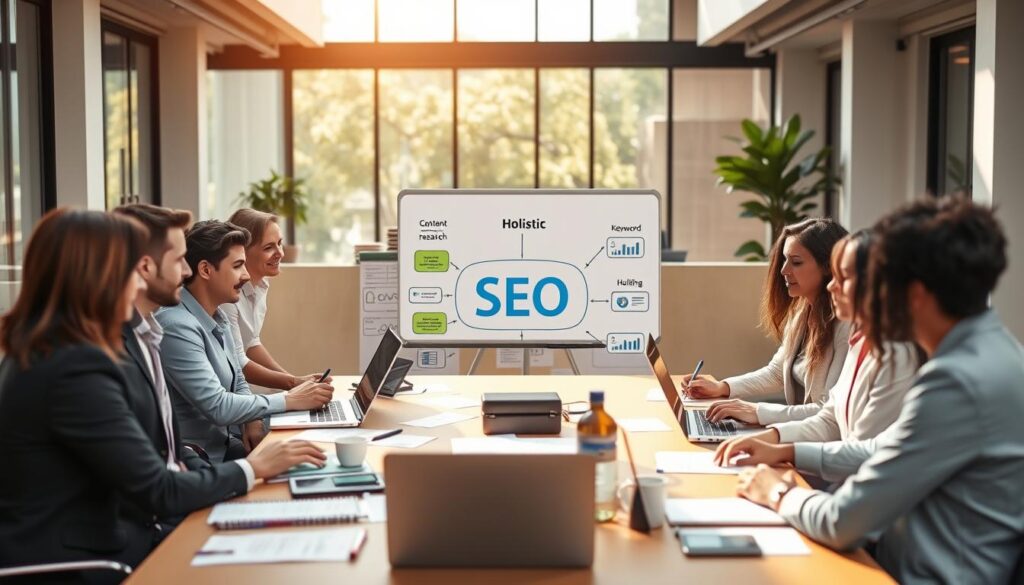
The most effective digital presence emerges from a unified strategy that connects various optimization components. This integrated method treats technical performance, content quality, and user experience as interconnected elements rather than separate concerns.
Balancing Technical and Content Optimization
Google’s core mission focuses on organizing information and providing the best answers. Creating genuinely valuable material for your target audience represents the most sustainable path to ranking success.
Effective strategy requires moving beyond simple traffic numbers. Focus on attracting qualified visitors who are likely to convert into customers. This demands alignment between your content and commercial intent.
Intent-based keyword research helps understand what users want to accomplish. Create material that satisfies specific needs rather than just targeting high-volume terms.
Different content types serve various purposes in the customer journey. Bottom-of-the-funnel content like detailed tutorials works well for technical products. This approach meets informed buyers’ specific requirements.
The digital landscape constantly evolves as algorithms become more sophisticated. What constitutes high-quality material and best practices changes over time. Consistent application across all dimensions creates sustainable success.
Balancing technical excellence with outstanding content creates synergistic effects. Each element enhances the others when properly integrated. This comprehensive approach delivers lasting results.
Conclusion
The journey toward better search performance is ongoing, not a destination you reach once. Even well-optimized websites face optimization challenges as algorithms evolve.
Regular audits using the tools in this guide help catch small issues before they hurt your rankings. This proactive approach maintains strong search results over time.
Focus on multiple areas simultaneously: technical optimization, content quality, and user experience. Consistent application of these best practices yields better long-term results than sporadic efforts.
Fixing existing issues and preventing future ones improves both search engines visibility and users satisfaction. Your website will see better conversion rates as a result.
By understanding these common seo mistakes and applying the solutions provided, you can significantly improve your website’s performance. This comprehensive approach delivers sustainable rankings improvement.