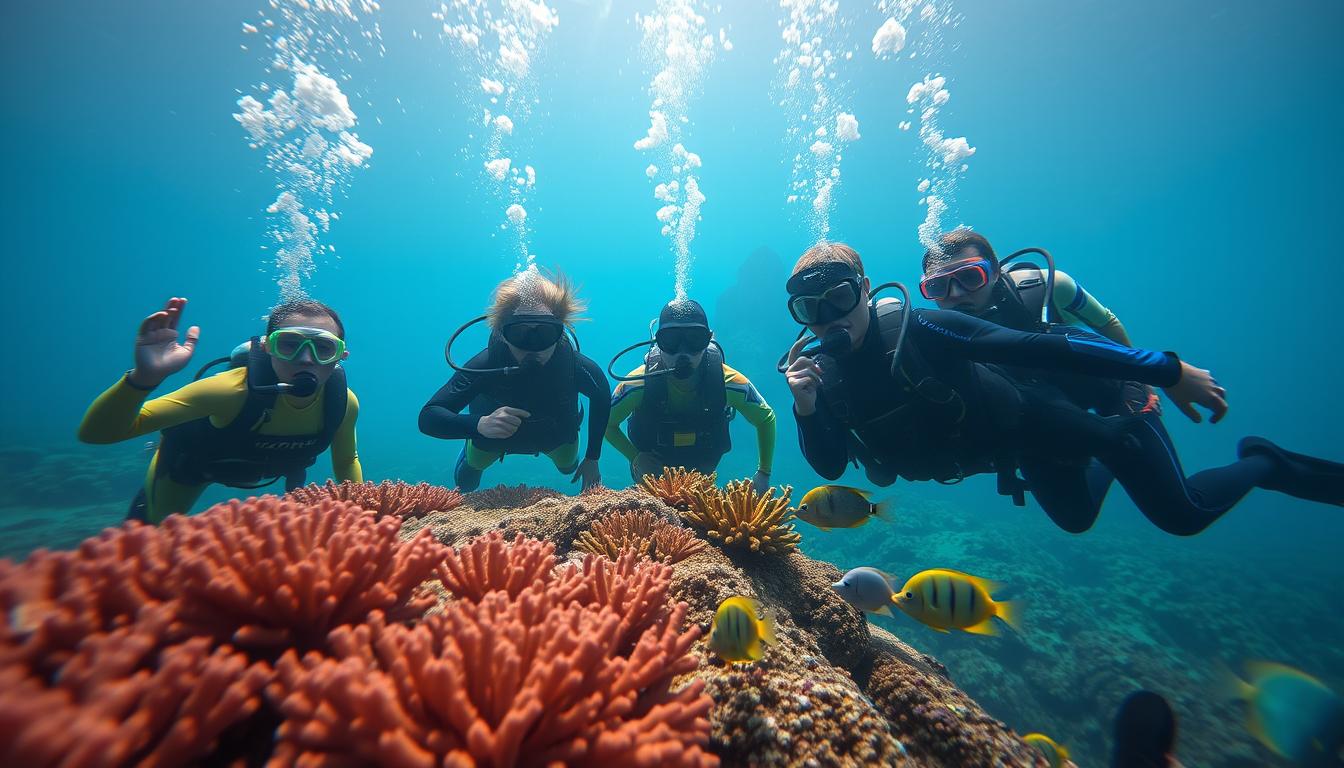
Two-thirds of our planet lies beneath the ocean’s surface, a vast world waiting to be explored. Scuba diving offers a passport to this incredible realm. It combines the thrill of adventure with moments of pure tranquility.
Every year, over one million people earn their scuba certification through organizations like PADI. This activity is more accessible than many realize. Individuals from various backgrounds and fitness levels successfully become certified divers.
This guide addresses common concerns for those new to the sport. Fears about breathing underwater or handling equipment are normal. We break down the process into clear, manageable steps.
The experience transforms how you see our blue planet. You can glide over vibrant coral reefs and encounter fascinating marine life. Discovering hidden shipwrecks adds a layer of historical wonder.
Whether seeking a unique vacation activity or a serious new hobby, this article provides the essential foundation. It covers fundamental concepts, safety protocols, and the path to certification.
Key Takeaways
- Scuba diving opens up exploration of the majority of our planet covered by water.
- Certification is highly accessible, with over a million new divers certified annually.
- The experience uniquely blends adventure with serene, weightless movement.
- Common beginner concerns about safety and equipment are addressed through structured training.
- Diving can be pursued as a recreational activity, a hobby, or even a career path.
- Proper training ensures safe practices for exploring reefs, marine life, and wrecks.
Understanding the Basics of Scuba Diving
Scuba technology has transformed our ability to explore aquatic environments that were once unreachable to humans. This equipment opens doors to incredible underwater adventures.
The Appeal of Underwater Exploration
The fundamental draw of scuba diving lies in accessing marine ecosystems most people never see. You can swim through vibrant coral reefs and observe fascinating sea creatures in their natural habitat.
Discovering hidden shipwrecks adds historical depth to the experience. The underwater world offers both thrilling adventure and peaceful tranquility.
Introduction to Diving Concepts
SCUBA stands for Self-Contained Underwater Breathing Apparatus. This technology allows divers to breathe comfortably beneath the surface.
The underwater environment operates under different physical laws. Understanding buoyancy and pressure changes is essential for safe exploration.
When you learn how to scuba dive through organizations like PADI, you join a community passionate about ocean conservation. This activity connects technical skill with environmental awareness.
Essential Tips: what beginners should know about diving
Successful diving experiences stem from a combination of quality instruction, patient practice, and respect for safety protocols. These fundamental tips create the foundation for enjoyable underwater exploration.
Certification and Safety First
Proper certification through organizations like PADI or SSI provides essential training. This systematic approach teaches necessary skills and safety protocols for underwater adventures.
Scuba diving requires specific knowledge similar to learning to drive. Certification courses cover equipment handling, buoyancy control, and emergency procedures. These skills ensure safe exploration.
Developing Confidence Underwater
Confidence builds gradually through structured progression. Beginners start with pool practice before advancing to open water environments. This methodical approach reduces anxiety.
Listening carefully to your instructor makes a significant difference. Over 95% of student divers highly recommend their PADI instructors. Quality instruction translates basic skills into real-world competence.
A lot of new divers benefit from mastering fundamentals before rushing. Patient skill development creates lasting confidence. This approach ensures each dive remains enjoyable rather than stressful.
Scuba Diving Certification and Training Paths
Gaining official recognition as a scuba diver requires completing a comprehensive certification course. This credential opens doors to global diving adventures and equipment rentals.
The journey typically begins with understanding available training options. Organizations like PADI and SSI offer structured pathways.
Open Water Diver Course Overview
The Open Water Diver program represents the entry-level certification. This course transforms novices into certified divers through systematic training.
Most students complete the program in four to seven days. Flexible scheduling allows up to one year for completion. The training follows a mastery-based approach.
| Component | Focus Area | Environment |
|---|---|---|
| Knowledge Development | Theory & Safety | Classroom |
| Confined Water | Skill Practice | Pool |
| Open Water Dives | Application | Ocean/Lake |
“Certification provides lifetime access to underwater exploration worldwide.”
Discover Scuba Experiences as a Starter
For those uncertain about commitment, Discover Scuba Diving offers introductory experiences. Participants try equipment and breathe underwater in controlled pool settings.
This low-pressure introduction helps build confidence. Many discover a passion for scuba diving through these initial sessions.
Training pathways accommodate various preferences. Options include local completion, referral programs, or destination learning. Each way ensures proper skill development.
Dive Preparation and Health Considerations
Before entering the water, divers must evaluate their physical fitness and medical conditions. This assessment ensures safety during underwater activities.
Assessing Your Fitness for Diving
Scuba diving requires reasonable health rather than athletic excellence. Basic comfort in water matters more than competitive swimming skills.
Certification courses test fundamental aquatic abilities. Students must tread water for 10 minutes. They also swim 200 meters without stopping.
Adaptive techniques help people with physical challenges. Individuals with paraplegia or amputations regularly earn certifications.
Pre-Dive Medical Check-ups
Medical screenings identify conditions needing physician approval. Respiratory issues like asthma require evaluation. Heart problems and recent surgeries also need clearance.
Different countries maintain varying medical requirements. Some mandate doctor signatures regardless of health status. Review medical questionnaires before booking courses.
| Medical Condition | Diving Implication | Required Action |
|---|---|---|
| Asthma | Risk during exertion | Physician evaluation |
| Heart Conditions | Pressure concerns | Cardiologist clearance |
| Recent Surgery | Healing time needed | Wait period + approval |
| Ear Problems | Equalization issues | ENT specialist review |
Honesty about health protects both the individual diver and their buddy. Understanding personal limitations makes each dive day enjoyable rather than stressful.
Selecting and Using the Right Dive Gear
The right diving equipment serves as your personal underwater life support system. Proper gear selection ensures comfort and safety during every aquatic adventure.
Choosing the Appropriate Equipment
Most scuba shops provide core rental equipment like tanks, BCDs, and regulators. Students typically purchase personal items like mask, snorkel, and fins for optimal fit.
A proper mask fit prevents leaks and ensures clear vision. Avoid using flimsy snorkel fins for scuba diving as they lack the power needed for heavier gear.
Maintenance and Comfort Tips
Communicate openly about fit issues with rental gear. A lot of discomfort stems from ill-fitting equipment that instructors can adjust.
After each dive, rinse all equipment with fresh water. This prevents salt buildup and extends your gear’s lifespan.
Cold water diving requires additional protection like gloves and hoods. Tropical environments allow for lighter scuba configurations.
Pre-Dive Safety and Gear Checks
Consistent safety protocols form the foundation of every successful underwater adventure. These systematic procedures protect divers from equipment failures in environments where immediate surfacing isn’t possible.
Every dive begins with meticulous equipment inspection. This routine verifies that air supplies, buoyancy controls, and breathing regulators function correctly.
Essential Pre-Dive Checklists
The buddy system extends to gear verification. Partners inspect each other’s configurations before entering the water. This mutual check ensures all components remain accessible for emergencies.
Make sure to review communication signals and dive parameters. Discuss depth limits and emergency procedures thoroughly. These conversations create shared understanding between dive partners.
“Proper preparation prevents poor performance—especially underwater.”
Boat diving introduces additional safety considerations. Learn vessel-specific entry points and recall signals. Understand where safety equipment is stored onboard.
Developing automatic checking habits transforms safety from a task into instinct. This consistency builds diver confidence while preventing oversight. Your scuba adventures remain secure through disciplined preparation.
Mastering Fundamental Diving Skills
Fundamental diving techniques separate casual participants from truly skilled practitioners. These core abilities transform theoretical knowledge into practical competence underwater.
Proper training focuses on building muscle memory through repetition. Each skill contributes to overall confidence and safety during every dive.
Buoyancy Control Techniques
Buoyancy control stands as the most essential scuba skill. Mastering neutral buoyancy allows effortless movement through the water column.
This technique conserves air and protects marine environments. Divers maintain position without touching delicate coral or stirring sediment.
Effective buoyancy involves coordinating BCD adjustments with breathing patterns. Practice in confined water builds this crucial ability gradually.
Effective Hand Signals and Communication
Underwater communication relies entirely on hand signals. Standardized gestures convey air supply, directions, and observations.
A key tip is practicing signals until they become automatic. This ensures clear communication when attention divides among multiple tasks.
Make sure to master mask clearing completely. Water entry happens regularly, especially with rental equipment.
The PADI Open Water diver course uses progressive skill building. Students start with partial mask clearing before advancing to full floods.
Strategies for Managing Underwater Challenges
Effective dive management relies on two critical skills: pressure equalization and controlled respiration. These techniques transform potential discomfort into enjoyable underwater exploration.
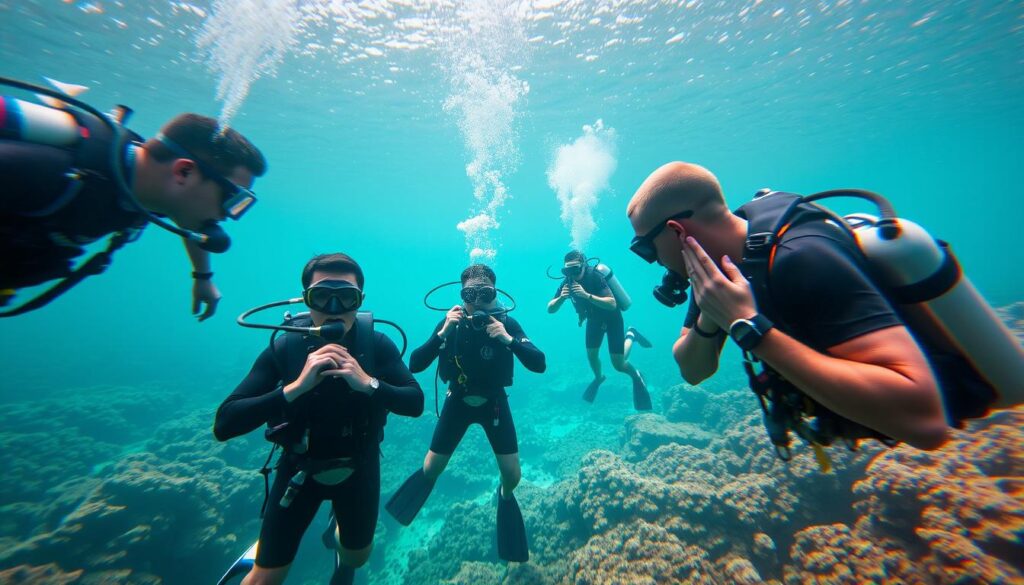
New divers often encounter ear pain during descent. This occurs when water pressure creates imbalances in air spaces.
Equalizing Pressure and Breathing Techniques
The best way to handle pressure changes involves descending slowly. Equalize frequently before discomfort begins. Try different methods like the Valsalva or Toynbee maneuvers.
Each person responds differently to equalization techniques. Discover which tip works best for your physiology. What helps one diver might not work for another.
Breathing technique affects every aspect of scuba performance. Slow, deep breaths with complete exhalation create rhythmic patterns. This approach promotes relaxation and efficient gas exchange.
Never hold your breath while diving. Continuous breathing prevents serious injuries from expanding air. Focus on breathing out longer than breathing in.
Monitor your air supply regularly, especially during initial dives. Check every five minutes since new beginners typically consume air faster. Proper breathing improves buoyancy control in the water.
Controlled respiration creates calm mental states underwater. This focused approach enhances situational awareness throughout your dive. It makes each underwater experience more enjoyable.
Dive Environment and Conditions: What to Expect
The underwater world presents an incredible diversity of environments, each with distinct characteristics that shape your diving adventure. Understanding these variables ensures safer and more enjoyable experiences beneath the surface.
Every dive location offers unique water conditions including temperature, visibility, and current strength. These factors determine equipment choices and skill requirements for each excursion.
Understanding Water Conditions and Visibility
Cold water diving demands specialized gear like drysuits and thicker thermal protection. These environments often require more experience and shorter dive times for safety.
Tropical ocean conditions typically offer warmer temperatures and better visibility. These forgiving environments allow lighter equipment and extended underwater exploration.
Conditions change dynamically based on weather, tides, and seasonal patterns. Always check current reports before diving in unfamiliar places.
Adapting to Changing Underwater Environments
Boat diving introduces additional considerations beyond basic water conditions. Learn vessel-specific procedures for entry methods and emergency protocols.
Guided dives with experienced divemasters provide valuable learning opportunities. Professionals assess whether conditions match your skill level while enhancing safety.
Liveaboard experiences transport divers to remote locations unreachable by day boats. These immersive trips offer multiple daily dives that rapidly develop skills and confidence.
Tips for Enhancing Your Scuba Diving Experience
A calm mindset serves as your most valuable piece of equipment during underwater exploration. These practical tips transform initial nervousness into confident diving experiences.
Staying Calm and Focused During Dives
Controlled breathing creates immediate relaxation underwater. Slow, deep breaths with complete exhalation regulate heart rate and conserve air.
Stay close to your dive buddy and instructor throughout the experience. This proximity provides security and ensures quick assistance if needed.
Recognize your personal limits without pressure to exceed them. Each diver progresses at their own pace. Scuba diving should remain enjoyable rather than stressful.
Master efficient fin technique with long, controlled movements. Proper kicking conserves energy and maintains comfortable swimming speeds.
Maintain respectful distance from marine life and ocean floor structures. Many organisms have defensive mechanisms that can cause injury.
Hydrate thoroughly after each dive session. The physical exertion of scuba diving often surprises new divers. Proper hydration aids recovery and prevents fatigue.
These essential tips help divers build confidence through accumulated experience. Each successful dive expands comfort zones naturally.
Advanced Training and Career Opportunities in Diving
The journey into scuba diving doesn’t end with basic certification—it’s just the beginning of deeper exploration. Certified divers can immediately pursue specialty training that enhances skills and opens new underwater worlds.
Exploring Specialty Courses
Advanced training offers numerous ways to expand your diving capabilities. The Advanced Open Water Diver course introduces various specialty dives like deep diving and wreck exploration.
Popular specialty programs include enriched air nitrox for longer bottom times and night diving for unique marine encounters. Each course provides specific skills for different environments.
These specialized dives prepare you for more adventurous sites around the world. Over years of practice, divers build confidence through continued education.
Pursuing a Professional Diving Path
For those passionate about scuba, professional pathways transform diving into a career. Rescue Diver training develops crucial emergency response skills.
Further progression leads to Divemaster and instructor certifications. These credentials allow experienced divers to guide others and share their knowledge.
The scuba community values continuous learning and skill development. Each new certification enhances your experience and safety underwater.
Conclusion
Scuba certification opens doors to experiences that redefine our relationship with the ocean planet. This journey transforms how we see the marine world and creates memories lasting for years.
Certification remains valid for life, with refresher programs available for returning divers. The skills learned prepare you for countless dives in diverse locations around the world.
Choosing PADI supports businesses committed to ocean conservation. The knowledge gained through proper training ensures safe exploration for decades.
This comprehensive article covers essential things for starting your aquatic adventure. Multiple ways exist to begin, from local courses to vacation certifications.
Even spending minutes each day reviewing skills maintains diving proficiency. The stuff covered here provides realistic expectations for successful underwater exploration.